
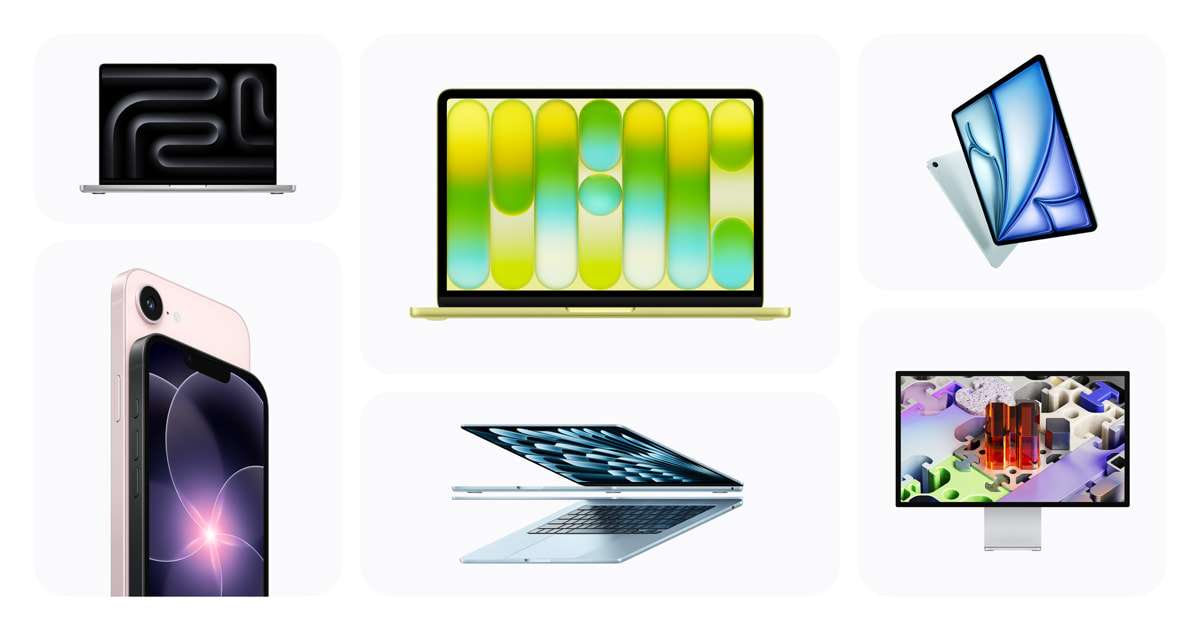
There is a particular kind of quiet that follows an Apple announcement, the hush after the benediction, when the rhetoric settles into retail reality. This week, that hush has a price, a ship date, and a checkout button. Apple’s newest devices are no longer rumors or keynote lines, they are objects you can carry out of a store, each one a small, polished argument about what computing should feel like in 2026.
Apple’s Newsroom update is, on its surface, a simple availability post, a roll call of fresh hardware now on sale. Read it closely, though, and you can see the company’s strategy written between the product names. The headline is breadth. The subtext is discipline.
The MacBook Neo, positioned as a startlingly accessible entry point, is the clearest signal that Apple still believes in the mainstream laptop as a civic device, not merely a luxury. A lower price does not mean a lower ambition. It means Apple is choosing, again, to make the “default computer” feel less like a compromise and more like a beginning. For many people, that matters more than another exotic benchmark chart. It means the first Mac is not a reach, it is a reasonable decision.
Nearby in this new constellation sits the iPhone 17e, described as “powerful and affordable,” which is Apple-speak for a phone designed to age well. When Apple improves the baseline, it changes the rhythm of upgrade culture. A capable entry iPhone does not just widen the funnel, it widens the lifespan, it makes the second and third year of ownership feel less like penance. In a world where our phones have become our wallets, keys, and emergency contacts, durability is not only a specification. It is a form of care.
Then there is the steady drumbeat of silicon. The MacBook Air with M5 and the MacBook Pro with M5 Pro and M5 Max continue Apple’s long project of turning performance into something you do not have to think about. The best chip upgrade is the one that disappears into your day. You simply notice that your photo library stops feeling heavy, that the export finishes before your tea cools, that the fan noise no longer narrates your workload. Apple’s phrasing leans into AI tasks, and whether you love that framing or distrust it, the underlying reality is simpler and more human. More compute headroom means fewer moments when your tools interrupt your thinking.
The iPad Air’s move to M4 is similarly telling. Apple keeps pushing the iPad into that fertile middle ground, more serious than a tablet stereotype, less fussy than a laptop. In practice, the iPad Air has become a kind of portable studio, equally comfortable as a sketchbook, a reading room, a classroom, and an editing bay. A faster chip here is not about chasing “pro” identity, it is about making the iPad’s many identities smoother to inhabit.
And finally, the displays. Monitors are not glamorous until you spend all day staring into one, at which point they become intimate architecture. Apple’s renewed Studio Display lineup is a reminder that the company still treats the desk as a stage for craft. A good display does not merely show your work, it returns your attention to you, reducing friction, restoring clarity, and letting the eyes relax into the page.
Put together, this is not one product story. It is a story about Apple refining the floor, not just the ceiling. The company is expanding what “good enough” looks like, and in doing so, it quietly reshapes expectations for everyone else. There is a kind of literary satisfaction in that, like a well edited paragraph. Nothing shouts, yet everything reads more cleanly.
If you are listening for a grand revolution, this week’s news may feel modest. But Apple rarely changes the world with a single trumpet blast. More often, it changes the world the way seasons do, by returning with familiar names, improved light, and a gentle insistence that the ordinary deserves better tools.