
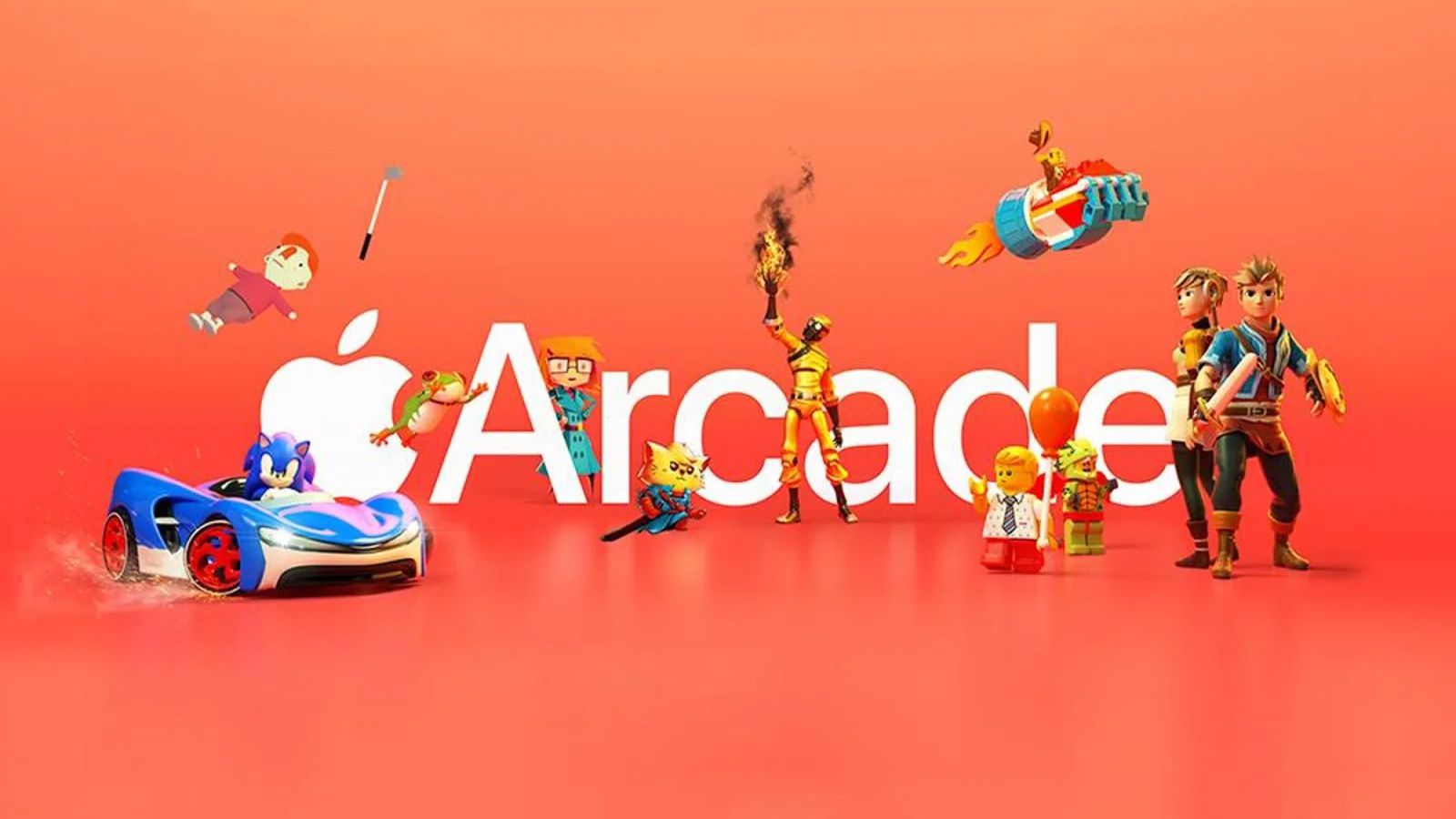
Apple’s latest Apple Arcade update looks, at first glance, like the familiar rhythm of a subscription service doing what it must: keep the catalog fresh, keep churn low, and keep the promise that members will always have something new to play. But the details of the March 5 rollout, headlined by Oceanhorn 3: Legend of the Shadow Sea, read less like routine maintenance and more like an intentional statement about where Apple still believes it can carve out durable advantage in gaming. This is not Apple trying to “win” in the console war. It is Apple reinforcing a different thesis: games as a Services flywheel, games as a showcase for Apple silicon across form factors, and games as one more reason to stay inside the company’s ecosystem.
According to Apple’s announced lineup, four games arrive on Apple Arcade on March 5, 2026, with Oceanhorn 3 joined by Pocket Love!+, Flow Free+, and Doraemon Dorayaki Shop Story+. Apple also highlighted near-term updates to existing titles, including a notable licensed crossover for Disney SpellStruck on February 19, plus time-limited and sports-timed updates for Crayola Create and Play+ and NFL Retro Bowl ’26. The package is deliberately balanced, a prestige anchor that can carry trailers and headlines, surrounded by comfort-food games that convert broad audiences and fit the pick-up-and-play reality of mobile.
The anchor matters. Oceanhorn 3 is positioned as a substantial, modern action-adventure release, described as fully 3D and designed for play across iPhone, iPad, Mac, Apple TV, and Apple Vision Pro. That cross-platform promise is a quiet through-line in Apple Arcade’s most important releases, because it maps onto Apple’s hardware strategy more directly than any single title ever could. Apple does not simply want you to subscribe. It wants you to feel that your subscription follows you, from pocket to couch to desk to headset, with continuity that other gaming ecosystems still struggle to deliver without friction.
Historically, Apple has approached gaming with a mix of ambition and restraint. The company has long benefited from being the default platform for mobile gaming economics, yet it has also resisted becoming a traditional game publisher, preferring platform leverage over content ownership. The App Store’s early years proved how powerful that stance could be, but they also exposed Apple to the blunt edge of free-to-play monetization and the reputational damage that comes with in-app purchase pressure, ad saturation, and the perception that mobile games are disposable. Apple Arcade, launched as an antidote to that dynamic, is best understood as Apple’s attempt to make “premium” a viable mainstream category again on its devices, while also giving parents, families, and casual players a simpler bargain: one fee, no ads, no in-app purchases.
What’s interesting about this March update is how it reflects Apple’s maturing sense of what works in subscription gaming. The lineup pairs a headline release with genre diversity: a cozy life simulator, a classic puzzle format, and a management game with a globally recognizable character brand. This is catalog strategy, not blockbuster strategy. It echoes how Apple Music and Apple TV+ have learned, in their own ways, that momentum is built through cadence and breadth, not occasional fireworks. Apple Arcade’s job is to be a steady part of Apple One’s value proposition, and a frictionless option for device owners who may never buy a console or a $70 AAA release, but will happily play in small daily sessions across multiple screens.
The timing also matters. March is not WWDC season, nor is it the September iPhone peak. It is a quieter stretch when Apple can still create reasons to pay attention and, crucially, reasons to keep paying. Services businesses thrive on habitual engagement. A strong content drop, followed by scheduled updates and limited-time events, is how you train that habit. Notice, too, how licensed crossovers function here. A Star Wars-themed update is not just fan service, it is a marketing accelerant that can bring lapsed players back and invite new players in, without Apple having to rebuild a game from scratch. In the modern subscriptions economy, updates are content, and content is retention.
From a hardware perspective, Oceanhorn 3’s cross-device positioning reinforces a broader Apple narrative: the company wants Apple silicon to be perceived as not merely efficient, but meaningfully capable for games. Over the last several years, Apple has repeatedly pushed the idea that iPhone, iPad, and Mac are legitimate gaming platforms, helped by the performance-per-watt story of its chips and the convenience of a unified ecosystem. Arcade titles that run broadly across Apple’s lineup are a way to demonstrate that promise without forcing developers to bet everything on one device category. For Apple Vision Pro, in particular, Arcade is a quiet but important layer, it gives the headset a steady feed of compatible experiences even when the headline visionOS apps are still in early-market formation.
For developers, the continued cadence of Apple Arcade announcements is a reminder that Apple remains willing to fund and feature content that matches its values: polished experiences, predictable business terms, and a monetization model that does not rely on psychological pressure. That does not make Arcade a utopia. Developers still weigh platform economics, discoverability, and the reality that subscription payouts can be opaque compared to direct sales. But Apple’s willingness to consistently refresh Arcade, and to elevate titles like Oceanhorn 3 as centerpieces, signals that the service is not a half-abandoned experiment. It is part of the broader Services machine, which means Apple has institutional incentive to keep it credible.
Consumers, meanwhile, are the direct beneficiaries of Apple’s simplest promise: games without ads and in-app purchases. In a market where many families have grown exhausted by monetization traps, Apple Arcade’s proposition is almost quaint in its clarity. The March lineup reinforces that Apple is still curating for different household types, a more involved player gets an action-adventure centerpiece, younger players and parents get familiar brands and cozy formats, and everyone gets updates that keep existing favorites from going stale. The underlying strategy is not to build a single community around one mega-game, but to keep many small communities lightly engaged, and collectively loyal to the subscription.
Competitively, Apple is occupying a lane between traditional premium gaming and the chaotic sprawl of free-to-play mobile. Microsoft’s Game Pass is the obvious comparison, but it is also a misleading one, because Game Pass is built around huge third-party licensing deals and a console-first identity. Apple Arcade is built around accessibility, broad device reach, and a predictable user experience. Netflix Games is a more direct parallel, in the sense that it treats games as an engagement layer for a subscription. Yet Apple has an advantage Netflix does not: platform control and deep hardware integration. Apple can place Arcade in the App Store, in Apple One, on every device setup flow, and inside system-level surfaces like the Games app, with a level of default visibility most competitors cannot match.
There is also a cultural dimension to Apple’s renewed emphasis on services-driven content drops. Apple has spent the last decade gradually shifting from being perceived as primarily a hardware company to being understood as an ecosystem company, where recurring revenue, customer lifetime value, and device retention are inseparable. Arcade’s March update is a micro-example of that broader thesis in motion. It is not just “more games.” It is Apple defending the idea that its ecosystem is calmer, safer, and more premium than the ad-driven alternatives, and that this calm has value worth paying for.
Looking forward, the most telling signal will be whether Apple continues to secure mid-sized “prestige” titles that can function as regular tentpoles, not necessarily on the scale of console blockbusters, but with enough ambition to make Arcade feel culturally relevant. Oceanhorn 3 is exactly that kind of title: recognizable within the Apple community, large enough to headline, and designed to show off cross-device play. If Apple can keep landing one or two releases per quarter that spark real conversation, while also maintaining the steady flow of accessible games and updates, Arcade’s role inside Apple One becomes sturdier, and Apple’s long-term gaming narrative becomes easier to believe.
For now, the March 5 drop is a clear, well-composed message. Apple Arcade is still here, still being curated, and still being used as a strategic lever, not merely as a catalog you forget about until your free trial ends. In Apple’s world, the smallest announcements often reveal the biggest priorities. This one suggests Apple still sees games not as a side quest, but as another durable pillar of the ecosystem it is building, screen by screen.