
There are deadlines that arrive like thunder, and deadlines that arrive like dust, settling almost invisibly on the familiar surfaces of daily life. Apple’s latest note to the faithful belongs to the second kind. It does not announce a glittering device, nor does it promise a new era of cinematic glass and silicon. Instead, it asks something more intimate: tend to your home.
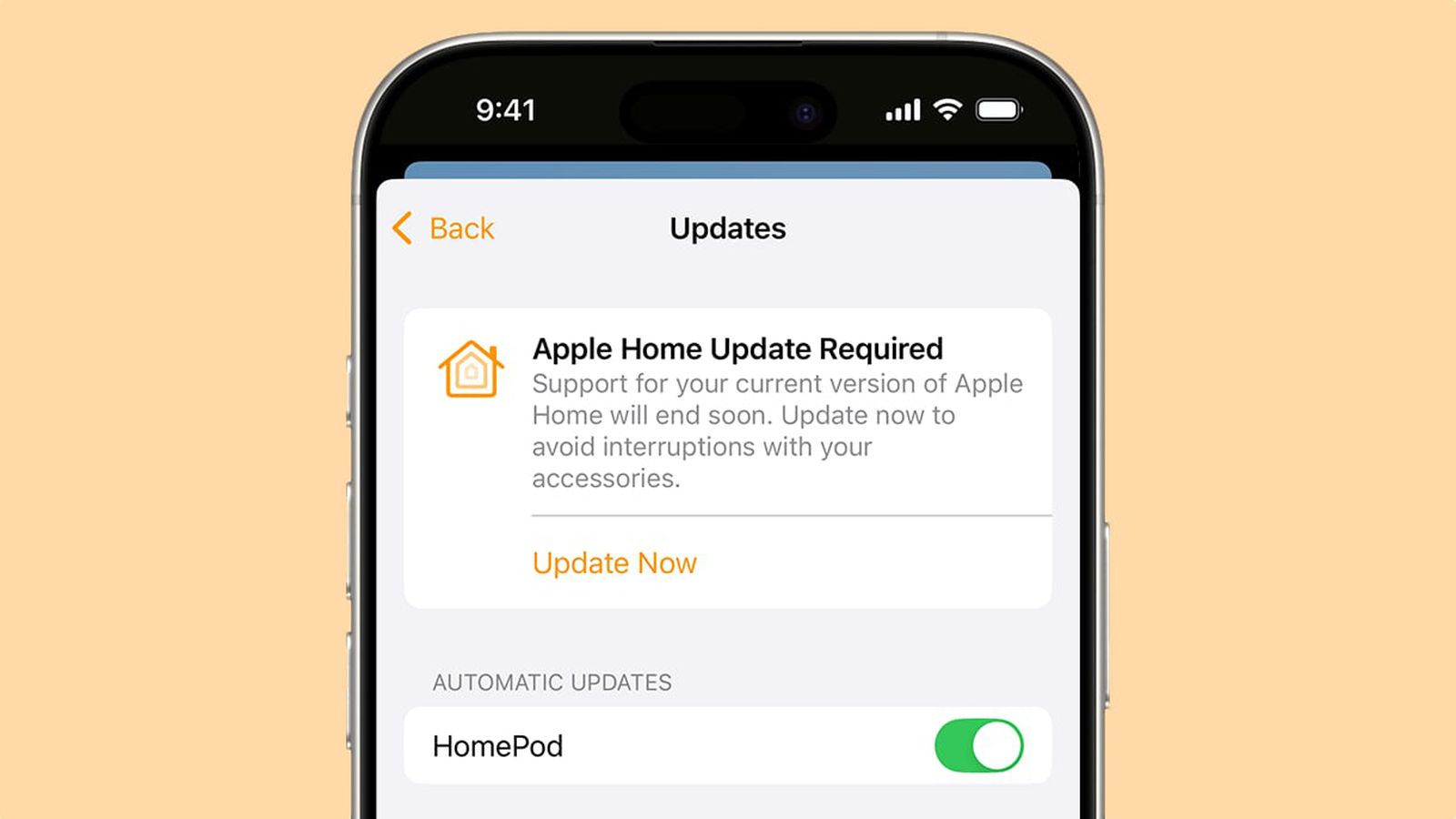
Apple has begun sending reminder emails to customers who have not yet upgraded to the newer Apple Home architecture, reiterating that support for the earlier version ends on February 10, 2026. The language is characteristically measured, yet the implications are not. If you do not update, access to your home in the Home app might be blocked, accessories and automations might misbehave, and, most importantly, you may stop receiving security fixes and performance improvements.
In a world increasingly composed of small, obedient machines, “home” is no longer only walls and keys. It is also the choreography of routines, lights that rise like a gentle stage cue at dusk, locks that remember, cameras that watch without blinking, and thermostats that anticipate. The Apple Home architecture is the scaffolding beneath that choreography. When Apple says it is retiring the older framework, it is not merely tidying up old code. It is drawing a firm line between past and present, between systems that can still be protected and systems that are now, by definition, left to weather the storm alone.
What, precisely, is changing? For many people, not much on the surface. The Home app will still look like the Home app, your rooms will still be your rooms. The meaningful shift lives underneath, in the reliability and responsiveness of how commands travel from your iPhone to your hub and out into the constellation of accessories that make up a modern household. Apple’s newer Home architecture, first introduced amid the iOS 16 era, was designed to improve performance and stability. Early adoption came with some turbulence, and that history is part of why this transition has been unusually patient by Apple standards. Now the patience has a date stamped onto it.
There is also a pragmatic, slightly uncomfortable truth embedded in the requirement list. The updated Apple Home architecture demands minimum software versions: iOS 16.2, iPadOS 16.2, macOS 13.1, tvOS 16.2, and watchOS 9.2. If you have an older iPad that lives permanently on the kitchen counter as a household control panel, or an older Apple TV pressed into service as a hub, the upgrade may force a decision. Either those devices come forward into the supported present, or they fall out of the Home you have built.
Apple frames the benefits with a quiet confidence. Updating can unlock newer capabilities such as guest access, support for robot vacuum cleaners, and Activity History. The list reads like a set of small conveniences, but together they point to Apple’s larger ambition: the home as a shared system, not a private tangle of individual workarounds. Guest access is not just a feature, it is an admission that modern households are fluid. Robot vacuum support acknowledges that “smart home” increasingly includes devices that move, not merely devices that wait. Activity History is a nod to our desire to understand what our homes do when we are not watching, a kind of domestic narrative told in timestamps.
If this feels less like an upgrade and more like a rite of passage, that is because it is. Apple rarely forces change without a reason, and here the reason is as old as software itself: to keep a system secure, you eventually must stop maintaining two foundations at once. The older architecture becomes a museum piece, and museums are for admiration, not habitation.
So, consider this a gentle call to stewardship. Open the Home app, navigate to Home Settings, then Software Update, and see what your household is built on. If the app tells you everything is up to date, you can go back to living. If it does not, do not wait until the final week before February 10, 2026. A smart home should feel like a sanctuary, not a last-minute migration.