
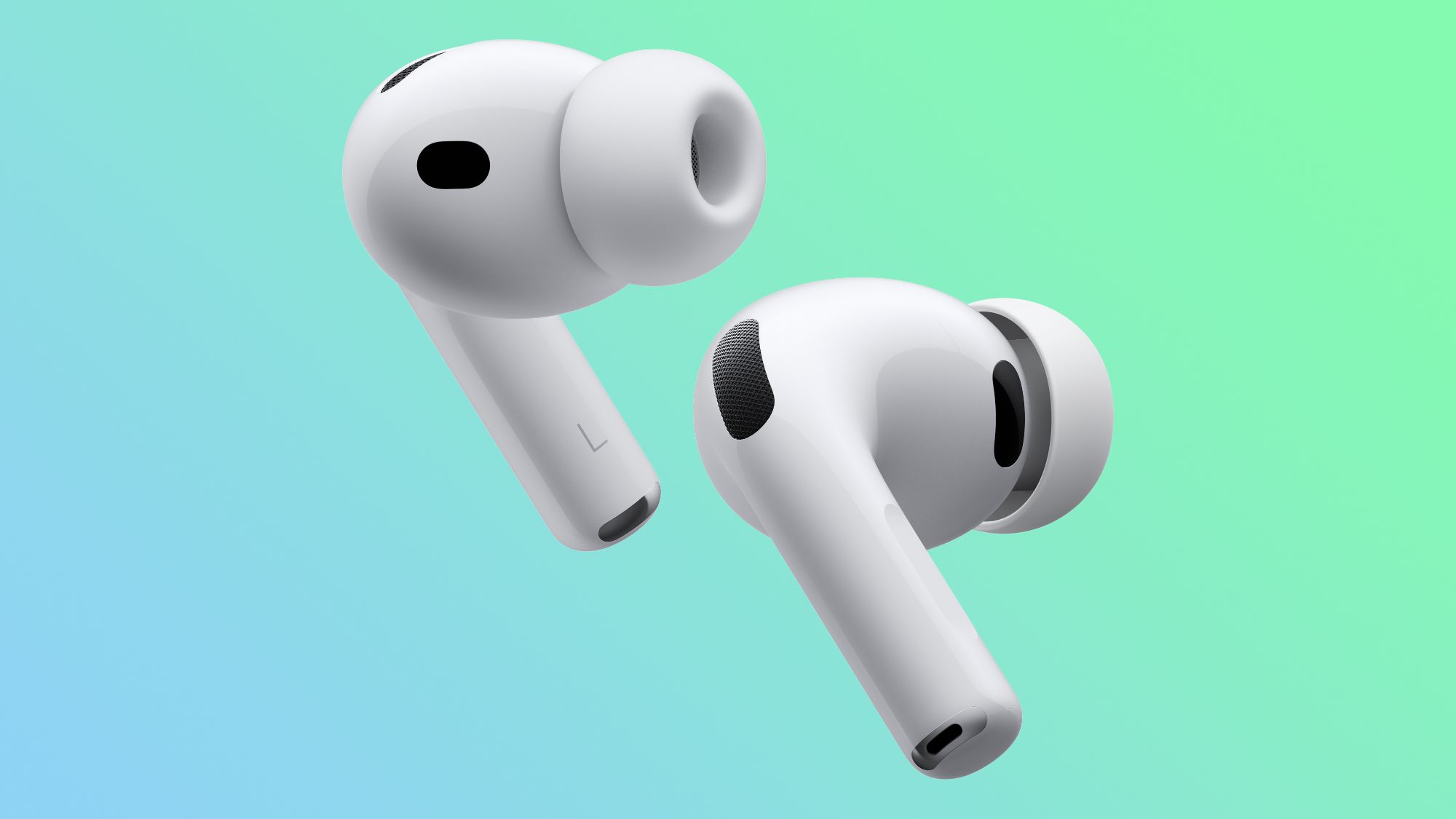
Apple’s latest AirPods Pro 3 firmware update, version 8B34, is the kind of release that would barely register outside the Apple ecosystem, yet it matters precisely because it is so understated. Issued on January 13, 2026, and described only as containing “bug fixes and other improvements,” the update reinforces a long-running Apple truth: the company increasingly treats its best-selling hardware not as isolated products, but as living endpoints in a tightly managed software network. When Apple updates AirPods, it is not just tuning earbuds. It is maintaining an audio computing platform that sits closer to the user than almost anything else Cupertino ships.
In practical terms, 8B34 is a point update for AirPods Pro 3, moving from the prior 8B30 firmware. Apple did not publish feature-by-feature release notes, and that silence is part of the story. AirPods firmware, unlike iOS or macOS, rarely ships with the kind of marketing narrative Apple wraps around major OS releases. But AirPods have evolved into an essential layer in Apple’s stack, where improvements to reliability, latency, microphone performance, and device switching can have a larger day-to-day impact than a flashy new app icon. The user experience of AirPods is built on the absence of friction. When they work perfectly, you do not think about them at all.
What makes this update particularly notable is that it is exclusive, at least for now, to AirPods Pro 3. In a product family where Apple often pushes firmware updates broadly across generations, a model-specific release suggests one of two things. Either Apple is targeting a hardware-specific issue that only affects the Pro 3 architecture, or it is carefully staging changes tied to newer capabilities that older models cannot fully support. In both cases, the implication is the same: AirPods are no longer treated as “just accessories.” They are differentiated computing devices with their own lifecycle and their own platform priorities.
To understand why a firmware revision number matters, it helps to step back and look at how Apple got here. AirPods began as a bold bet in 2016, launched alongside the iPhone 7 and the removal of the headphone jack, a decision that triggered public backlash and industry-wide debate. Tim Cook’s Apple framed it as courage, but the long-term strategy was clearer in hindsight: Apple wanted to own the wireless audio experience end to end, from silicon to software to services. AirPods were initially sold as a convenience product. Over time, they became the default audio interface for hundreds of millions of iPhone users, and a gateway to Apple Music, FaceTime, Podcasts, Fitness+, and, increasingly, Apple’s broader ambitions in real-time communication and spatial computing.
That transformation has been driven by software as much as hardware. Features like fast pairing, iCloud syncing, automatic device switching, Adaptive Audio, Conversation Awareness, and deeper accessibility controls have steadily moved AirPods up the value chain. Firmware updates are the hidden conveyor belt delivering these gains. In recent months, Apple has also expanded mechanisms for managing AirPods software, including more explicit firmware update behaviors through device settings. This is not accidental. Apple is maturing AirPods the way it matured Apple Watch, from “gadget” into “platform.”
From a market perspective, this quiet firmware push also highlights how Apple competes in consumer audio. Rivals like Sony, Bose, Samsung, and Google can match or exceed Apple on select headline metrics, sometimes offering higher-resolution codecs, more customizable EQ, or stronger noise cancellation in certain scenarios. But Apple’s competitive edge remains integration. AirPods are designed to be part of a system, and every incremental update that improves reliability strengthens that moat. If automatic switching becomes imperceptibly faster, if connection drops become rarer, if call audio is cleaner, the result is a product that feels more “inevitable” than any competitor’s earbuds, even if the spec sheet is not always the most aggressive.
For consumers, the immediate story is straightforward: keep your devices updated, keep your AirPods in range, and let the firmware install itself. Apple’s process is intentionally passive. The company believes updates should be invisible, happening in the background when your iPhone, iPad, or Mac is nearby, your AirPods are charging, and your devices are connected to Wi-Fi. This design reduces user error and keeps the fleet consistent, but it also frustrates power users who want a manual “update now” button. Apple has rarely budged on this philosophy. The company is willing to sacrifice a small amount of user control in exchange for a higher baseline of reliability across a massive installed base.
Developers, meanwhile, should read updates like 8B34 as a reminder that Apple’s audio pipeline is becoming more central to the platform. Apple has steadily expanded what third-party apps can do with audio, voice capture, and spatial playback, but it still keeps the deepest integration advantages for its own ecosystem experiences. Every time Apple adjusts firmware behavior, it can subtly change the performance envelope for VoIP apps, conferencing tools, and entertainment experiences that rely on consistent microphone input and stable Bluetooth behavior. That creates both opportunity and risk: opportunity when Apple improves the underlying system, risk when behavior changes are not fully documented. In that sense, AirPods firmware is part of the same broader story as iOS betas, where developers must continuously test against Apple’s evolving assumptions.
The competitive implications stretch further when you consider Apple’s trajectory. AirPods are likely to be a primary interface for Apple Intelligence era experiences that depend on voice and context. Even if Apple keeps most AI processing on-device or within its Private Cloud Compute infrastructure, the user-facing interaction is often auditory: listening, speaking, hearing feedback. Earbuds are the most natural hardware for that loop. It is not difficult to imagine future AirPods releases leaning further into real-time translation, enhanced conversation capture, adaptive soundscapes, and health-adjacent sensing. The groundwork for those futures is laid in updates like this one, even when the immediate release notes are minimal.
There is also a subtle corporate message embedded here about Apple’s discipline. This is a company that has long prized end-to-end control. Under Tim Cook, operational excellence and supply chain mastery have remained central, but software services have become the primary narrative for growth and stickiness. AirPods sit at the intersection: they are hardware sold at scale, yet their value compounds through software and services. An “unspecified improvements” firmware update is, in a way, Apple’s purest expression of maintenance as strategy. The product improves, the ecosystem stays cohesive, and the customer feels fewer reasons to look elsewhere.
Looking ahead, the most interesting question is not what 8B34 contains, because Apple is not saying. The more revealing question is what Apple is preparing AirPods to become in 2026 and beyond. If this update is primarily about stability, it suggests Apple is shoring up the foundation as it continues to layer more ambitious features on top. If it is tied to specific iOS 26-era enhancements, it points to a future where AirPods capabilities are increasingly gated by both hardware generation and OS version. That would mirror Apple Watch’s evolution, where new features arrive annually but remain tightly tied to the latest watchOS and the newest silicon.
In the end, AirPods Pro 3 firmware 8B34 will not dominate headlines the way a new iPhone launch does, nor should it. But in Apple’s world, the “small” updates are often the ones that best reveal how the company operates. Apple is building an audio platform that has to work effortlessly across iPhone, iPad, Mac, and whatever comes next in spatial computing and ambient intelligence. Each incremental improvement, however quietly delivered, is another brick in that architecture.