
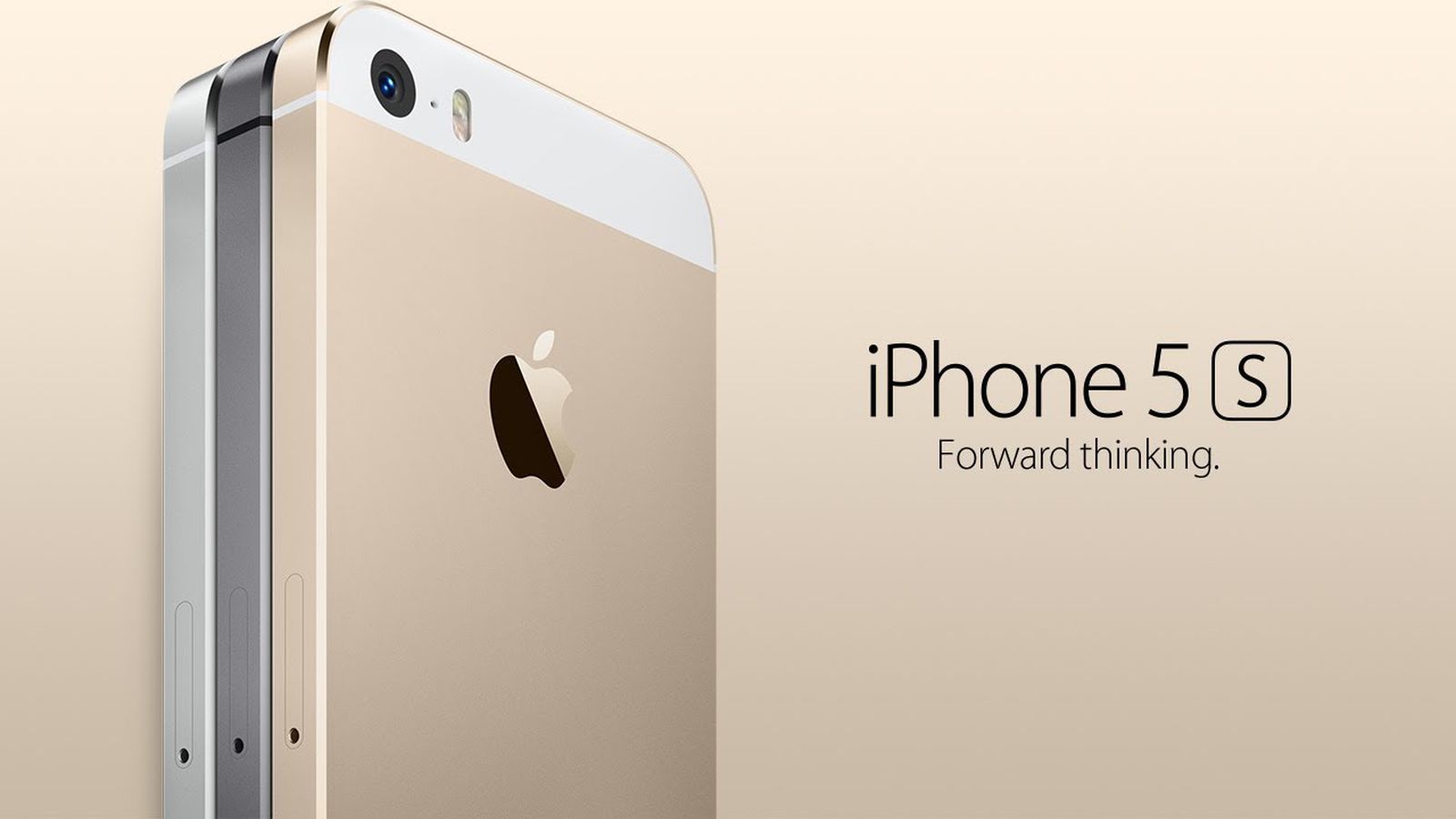
Apple’s most telling moves are often the ones that arrive without a keynote, without a trailer, and without Tim Cook on stage to frame the narrative. This week’s clearest example is iOS 12.5.8, a late-cycle update pushed to devices that, in most consumer electronics timelines, should be museum pieces. For owners of an iPhone 5s or iPhone 6, Apple’s update is not a feature drop, it is a continuation of basic modern life: iMessage, FaceTime, Apple Account sign-in, and device activation will keep functioning beyond January 2027 thanks to a renewed certificate. In practice, this is Apple deciding, deliberately, that a 2013 phone still deserves a stable on-ramp to the company’s essential services layer.
On its face, iOS 12.5.8 reads like pure maintenance, and it is. But maintenance at this age is a statement. Most platform companies treat their oldest devices as a rounding error, a support burden to be trimmed. Apple has chosen the opposite posture, at least for critical service continuity, and the reason is as much strategic as it is customer-friendly. When Apple keeps ancient hardware viable, it is not just preserving iPhones, it is preserving the credibility of the Apple ecosystem itself. If Apple’s services are positioned as dependable utilities, then utility-grade reliability has to extend further back than the typical two or three year consumer upgrade window.
To understand why this certificate extension matters, it helps to revisit what the iPhone 5s represented. Launched in September 2013, it was the device that introduced Touch ID and the A7, Apple’s first 64-bit smartphone chip, which forced the industry to reckon with Apple’s silicon ambitions years before most competitors were ready to respond. The iPhone 6, arriving in September 2014, scaled that trajectory to a far larger audience, becoming one of the company’s most popular product lines and helping define the larger-screen iPhone era. Those devices sit at an inflection point in Apple history, when the company was shifting from iPhone as a product to iPhone as the anchor of a broader platform economy.
That platform economy is now the story. Apple’s services business is not merely an add-on, it is the connective tissue that makes the company’s device lineup feel cohesive and, increasingly, indispensable. Even if an iPhone 5s cannot run Apple’s latest operating systems or participate in the newest AI features, it can still serve as a communication endpoint, a secondary device, a family hand-me-down, or a budget lifeline. Keeping iMessage and FaceTime alive on those devices preserves Apple’s baseline promise: your conversations and identity should not evaporate because time passed or a certificate expired.
There is also a very practical, operational dimension here. Certificates expiring is one of those technical cliffs that can abruptly strand large numbers of users. Unlike gradual software obsolescence, where features slowly fall away, a certificate failure is binary. Activation breaks. Sign-in breaks. Messaging and calling services can break. Apple is preventing a future support crisis by acting now, and notably, doing so with years of runway before January 2027. That lead time suggests planning and internal coordination across teams that most consumers never see, the kind of long-horizon maintenance that becomes necessary when your installed base reaches into the billions and your oldest devices remain active in meaningful numbers.
From a market perspective, this quiet update also functions as a rebuttal to one of the most persistent critiques of Apple’s business model: that it is designed primarily to push frequent hardware upgrades. Apple absolutely benefits when users buy new devices, and the company has built an upgrade engine that is both sophisticated and emotionally resonant. But the endurance of iOS support for legacy devices complicates the simplistic narrative. Apple can be aggressive about keeping users secure on modern hardware while still ensuring that aging devices do not suddenly fail at the foundational level. It is not altruism, it is brand maintenance, ecosystem hygiene, and risk management.
For consumers, the implications are straightforward and valuable. Older iPhones continue to serve as backup phones, kids’ first phones, travel devices, dedicated music players, home automation remotes, or devices repurposed for accessibility needs. In many households, especially in cost-sensitive segments, these older devices remain in circulation long after they exit the retail channel. By extending certificate validity, Apple effectively extends the usable life of devices that would otherwise be forced into premature retirement. That is not just a convenience, it is a sustainability win in real terms, fewer devices pushed into drawers or e-waste streams simply because a service switch flipped off.
For developers and the broader software ecosystem, the story is more nuanced. Apple’s modern developer narrative centers on new frameworks, new hardware capabilities, and an annual cadence that encourages forward motion. Yet legacy support is a form of platform stewardship that stabilizes the lower edge of the installed base. While iOS 12-era devices are far from the primary target for most new apps, their continued ability to authenticate and communicate keeps them from becoming “dead endpoints” on networks that still matter. That reduces fragmentation in a subtle way: a device can be old, but not broken. For certain categories, like messaging interoperability, authentication workflows, and family device management, that distinction matters.
Competitively, Apple’s approach stands in contrast to much of the Android ecosystem, where OS updates are often shorter-lived, carrier dependencies can complicate distribution, and long-tail service continuity varies widely by manufacturer and region. Google has pushed the industry toward longer update commitments in recent years, and some Android OEMs have improved dramatically, but Apple remains uniquely positioned because it controls the hardware, software, and key services. That vertical integration enables Apple to do something that is still surprisingly rare in consumer electronics: treat even decade-old devices as part of an ongoing service contract, not merely a depreciated asset.
It would be a mistake, however, to romanticize this as Apple embracing indefinite support. The company’s posture remains calibrated. iOS 12.5.8 does not modernize these devices, it keeps them from falling off a cliff. That is consistent with Apple’s broader strategy, keep the baseline stable, keep users secure where possible, and move the frontier forward on newer hardware. It is also consistent with Apple’s increasing focus on “platform trust,” the idea that Apple devices are safe, reliable, and supported in ways that justify the premium pricing and the ecosystem lock-in that comes with it.
Looking ahead, this update is likely a preview of how Apple will manage the ever-growing tail of legacy devices as services become more central and as identity, payments, and secure communication become more regulated and more politically sensitive. As Apple expands the capabilities of Apple Account, deepens iCloud reliance, and positions its devices as identity and authentication tools, continuity becomes a strategic requirement. You cannot sell reliability as a differentiator if your oldest active devices can be bricked by an avoidable certificate expiration. iOS 12.5.8 is the sort of unglamorous work that makes Apple’s glossy promises feel real.
In the end, iOS 12.5.8 is a small update that reveals a large truth about Apple in 2026. The company is building a future where services are the persistent layer and hardware is the evolving interface. In that world, even an iPhone 5s still has a role to play, not as a modern smartphone, but as a citizen of Apple’s networked society. Apple did not throw a party for this decision, but the decision is consequential nonetheless. It keeps old devices alive, it protects Apple’s reputation for support, and it underscores that the ecosystem is only as strong as its weakest still-active link.