
If your Apple news feed feels like it flips between shiny gadgets and quiet, behind-the-scenes strategy, this week is firmly in the second category. Apple has been talking more openly about where its components are made, where its servers are built, and how it wants its supply chain to look in the next few years. And while the year-end product calendar is calmer than September, the software train is still moving with iOS 26.2 and the usual companion updates for iPad, Mac, Watch, and more.
Let’s start with the big headline that actually affects everything you buy. Apple says it has increased its U.S. investment commitment to $600 billion over four years and launched what it calls the American Manufacturing Program. The details are the interesting part. Apple says the program is designed to bring more of its supply chain and advanced manufacturing to the United States and to encourage global partners to build more critical components in the U.S. In practical terms, Apple points to major supplier work across multiple states, and it highlights components that show up in the devices people care about most.
One specific claim that grabbed our attention is Apple’s statement that every iPhone and Apple Watch sold worldwide will be built with Kentucky-made cover glass as part of an expansion with Corning. If that holds, it is one of those rare supply chain moves you can explain to a normal person in a single sentence. The screen glass on your next iPhone is not just “premium.” Apple wants it tied to a specific domestic production line, at a massive scale.
Apple also framed this as a silicon story. The press release talks about building an end-to-end American silicon supply chain and calls out partnerships that span wafers, fabrication, and packaging. Even if you never plan to read a semiconductor explainer, this matters because it is directly connected to Apple’s long-term goals around performance per watt, modem and wireless components, and the infrastructure that supports Apple Intelligence.
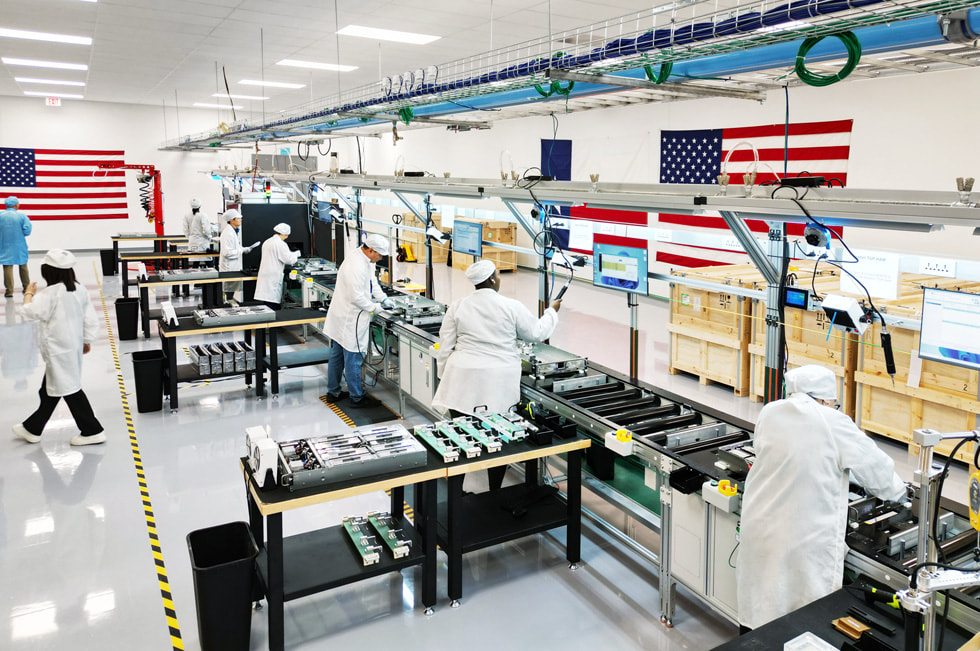
Speaking of Apple Intelligence, Apple also highlighted its work on advanced servers and a facility in Houston that will support production. The company positions this as part of the foundation for Private Cloud Compute. If you are trying to read the tea leaves, the message is clear: Apple wants the AI era to feel like an Apple era, where the hardware, the silicon, and the privacy story are all linked. The more of that stack Apple can control and locate close to home, the more resilient it is when the world gets weird.
Now, the part you will actually touch this month: software. As we roll through late December, the expectation is iOS 26.2 and the companion updates across Apple’s platforms. This is the time of year when Apple typically prioritizes stability and quality-of-life improvements. That means fewer stage-demo features, more “oh thank goodness” fixes and refinements that make your phone, iPad, and Mac feel better without you having to think about it.
If you are the type who updates the minute a new build drops, the best advice is still boring but true. Back up first, do it on Wi‑Fi, and give your device a couple of hours after the update for indexing and background tasks to settle. iOS updates can feel heavy right after install, then magically normal again by the next morning.
Also, do not sleep on the iPad side of the house. Holiday updates are often when the iPad gets small workflow wins that compound over time. If your iPad is your daily driver for email, notes, and multitasking, these are the releases that quietly make it feel more “computer” without Apple needing to market it like a whole new product.
The Church Of Apple takeaway: the gadget headlines will return soon enough, but Apple’s most consequential moves are often the ones that happen far from a keynote stage. When Apple talks about glass, chips, packaging, and servers, it is really talking about the future iPhone, the future MacBook, and the future of on-device and cloud-assisted intelligence. And the best part is that, even in a quieter season, your devices keep getting better through the steady drumbeat of platform updates.