
In Apple’s long liturgy of design, change rarely arrives as a shout. More often it comes as a revision to the margins, a subtle edit that, once noticed, makes the old page feel strangely unfinished. This week’s most intriguing Apple whisper is just such an edit: a report that future OLED, touchscreen MacBook Pros may borrow the iPhone’s Dynamic Island, a small, shape-shifting notch that turns interruption into interface.
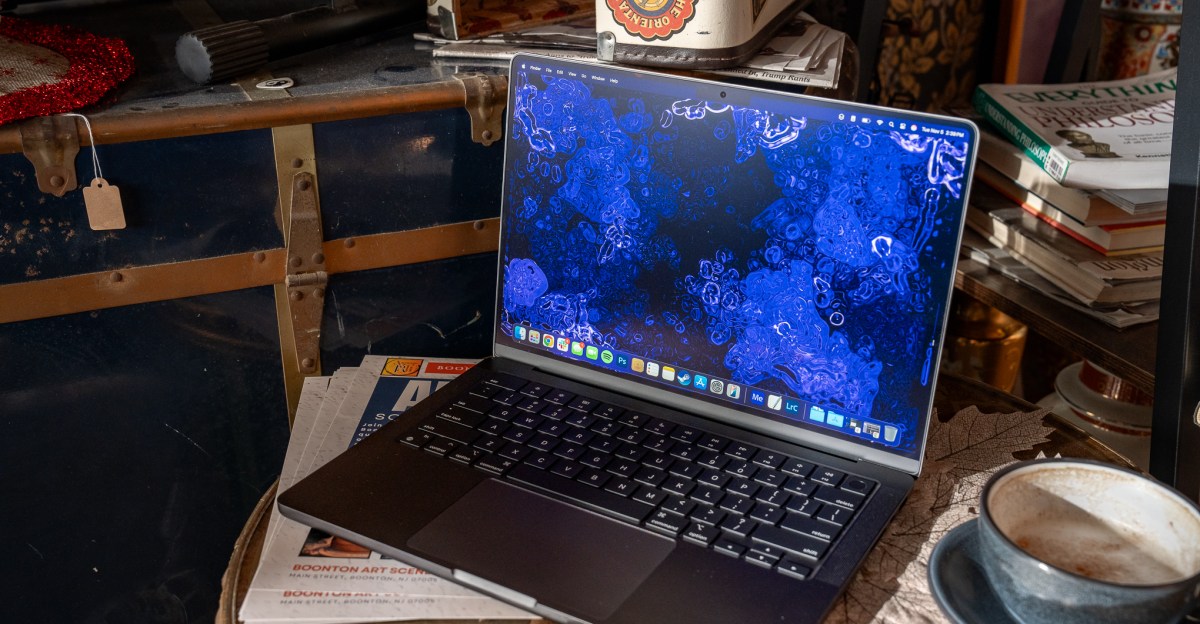
According to Bloomberg’s Mark Gurman as relayed by The Verge, Apple is preparing 14-inch and 16-inch MacBook Pro models with OLED displays and touch input, and these machines may include a Mac interpretation of Dynamic Island. On the iPhone, the feature is partly pragmatic, it gives the camera and sensors a home, and partly theatrical, it turns that necessary cutout into a stage for live activities and alerts. On a Mac, the idea is both familiar and quietly radical: the most traditional Apple computer, the workhorse laptop, would adopt a concept born in the pocket.
The story’s most consequential detail is not the black capsule itself, but what it implies about Apple’s user interface philosophy. The report suggests Apple would adjust macOS behavior to better accommodate touch, not by replacing the pointer, but by letting touch change the meaning of the screen in the moment. Tap a control and, rather than forcing precision that fingertips cannot easily provide, the interface could respond with a context-aware menu that blooms around your finger, offering options sized and positioned for touch. It is an elegant compromise, one that treats touch not as a gimmick bolted onto a laptop, but as a different mode of intent.
For years, Apple’s public stance on touchscreen Macs has been a kind of doctrinal clarity. The argument was ergonomic as much as ideological: vertical touchscreens invite fatigue, and the Mac already has a perfected language of input in the keyboard and trackpad. Yet doctrines evolve when reality changes around them. The iPad grew up, acquired keyboard cases, trackpads, and a cadence of work once reserved for laptops. Meanwhile, the boundary between devices has softened into Continuity, Sidecar, universal control, and a general expectation that Apple hardware should feel like one ecosystem with different silhouettes.
If a touchscreen MacBook Pro arrives, it will not simply be the Mac learning to accept touch. It will be Apple acknowledging that modern computing is not one posture. We shift from desk to couch to flight tray, from precision work to quick triage, from deep focus to a thousand small interruptions that still need to be handled with grace. Dynamic Island, in that light, reads less like a borrowed iPhone trick and more like a new punctuation mark for the Mac: a place where the system can speak without derailing the sentence you are writing.
Of course, the Mac is not the iPhone, and the iPhone is not the Mac. The risk is that a feature designed for a small display becomes ornamental on a larger one, a novelty that fades once the first week’s curiosity has passed. Apple’s challenge, if this report proves true, will be to make the Dynamic Island feel inevitable on macOS, the way Spotlight eventually did, or the way trackpad gestures became second nature. The benefit of Apple’s long timelines is that the company tends to wait until an idea can be made coherent, even if that coherence arrives late.
In the end, this is the kind of rumor that matters because it is about language, not just hardware. OLED, touch, and a refined notch are specifications. The real story is whether Apple is preparing a Mac that can converse in two dialects at once: the old, precise grammar of pointer-driven computing, and the more direct, tactile idiom people have learned from phones and tablets. If Apple pulls it off, the MacBook Pro may not merely gain a touchscreen. It may gain a new way to listen for your intent, and answer without fuss.