
Apple has started 2026 with a familiar kind of announcement, the sort that can be easy to dismiss as seasonal marketing. New Fitness+ programming, new Time to Walk guests, an Artist Spotlight refresh, and a gentle reminder that Apple Watch is your everyday companion. But look closer and you see something more deliberate. This is Apple using January, the most psychologically potent month on the fitness calendar, to tighten the relationship between Apple Watch hardware and Apple’s Services machine, while simultaneously reinforcing its claim to credibility in health research and behavior change.
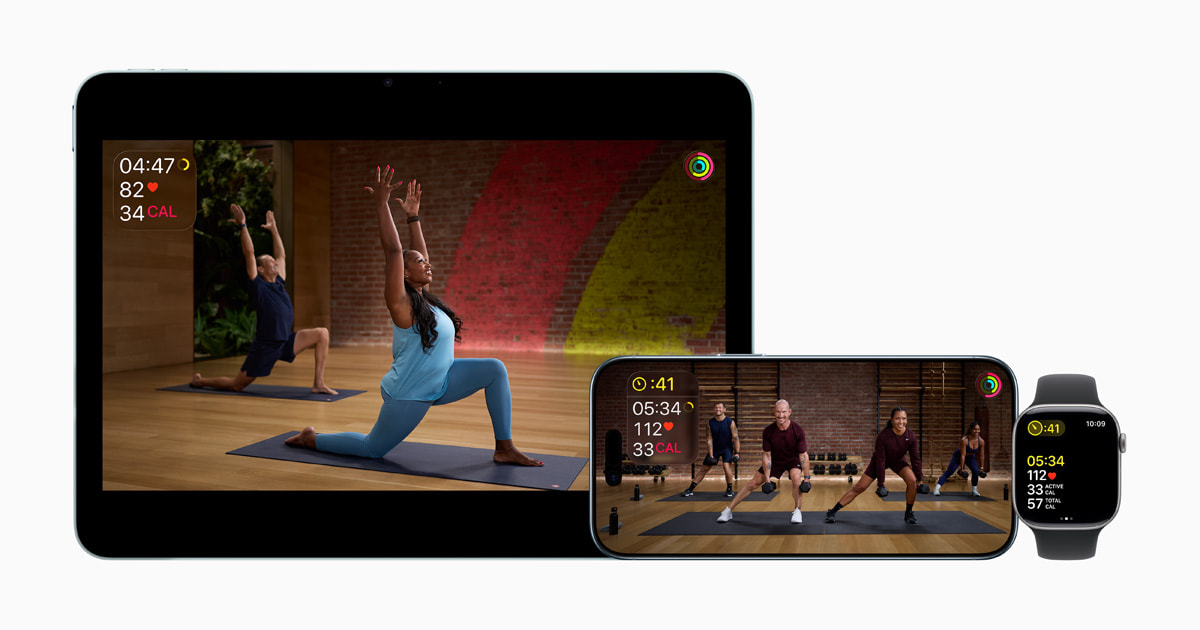
The immediate news is straightforward. Apple says Fitness+ is introducing new programs and content to help users kick off the year, and it is pairing that with a fresh analysis from the Apple Heart and Movement Study suggesting that participants who wear Apple Watch not only increase exercise in January but sustain higher activity levels beyond the first burst of New Year motivation. Apple also notes the familiar set of cross-product hooks, including multi-device access to Fitness+ and promotional offers that often accompany new purchases. On the surface, it reads like a clean, optimistic update designed to get people moving.
The strategic story is that Apple is treating the Apple Watch as both an endpoint and an on-ramp. It is an endpoint in the sense that it is the device on your wrist, collecting data, nudging habits, and serving as the daily interface for movement and health cues. It is an on-ramp because every sustained workout habit becomes a recurring relationship with Apple’s subscription ecosystem, especially Fitness+, and by extension Apple One bundles. In a market where smartphone upgrade cycles have lengthened, and where the wearables category has matured past novelty, retention is the most valuable feature Apple can ship.
January is not an arbitrary moment for that push. In the broader consumer wellness industry, January is the peak season for gym signups, training plans, and any product that promises a fresh start. Apple has steadily learned how to operate within that rhythm. If you track the company’s public messaging over the last decade, there is a clear pattern: hardware launches in the fall, Services and engagement programs in the winter, and developer platform narratives in the spring. The New Year is when Apple can turn existing hardware into renewed usage, and renewed usage is what keeps Services revenue sticky.
There is also a deeper Apple story here about the evolution of Apple Watch itself. The Watch began life in 2015 as a device that struggled to define a single purpose, a product that wanted to be jewelry, notification screen, and mini computer all at once. The breakthrough came when Apple leaned hard into health and fitness, building credibility through sensors, software, and partnerships. Over the years, watchOS updates and health features became the Watch’s identity, and Fitness+ was the logical extension, a subscription that made the Watch more valuable while giving Apple recurring revenue. What we are seeing now is the maturation of that formula: fewer dramatic reinventions, more compounding returns from consistent engagement.
Apple is also increasingly comfortable citing its research posture as part of its consumer pitch. The Apple Heart and Movement Study, which Apple references again in this update, is part of a larger collection of Apple-backed studies that aim to strengthen the company’s claim that it is not just shipping wellness vibes, it is building measurable health tools at population scale. This matters because Apple is competing in a trust-based category. Step counts are easy. Health insights are complicated. The more Apple can position Apple Watch as a device that changes long-term behavior, the more it distinguishes itself from cheaper trackers and from smartwatch rivals that lean more heavily into platform features than clinical credibility.
From a market perspective, this is also Apple playing defense in wearables while simultaneously attacking adjacent categories. Wearables have competitors on every flank: dedicated fitness brands that specialize in endurance metrics, Android ecosystem watches that chase feature parity, and increasingly capable budget bands that satisfy basic tracking for a fraction of the price. Apple’s answer is not to race to the bottom. It is to expand the ecosystem moat. Fitness+ is part of that moat because it ties content, coaching, music integration, and device telemetry together in a way that is difficult to replicate across fragmented hardware.
Consider the competitive landscape. Peloton, at its peak, sold an idea: hardware plus subscription plus community. Apple is not selling a bike, but it is quietly selling the same pattern, at massive scale, through devices people already own. Fitbit and Google can deliver fitness content, but Apple’s advantage is the coupling of Watch data, on-screen metrics, and device-to-device integration across iPhone, iPad, and Apple TV. And if Apple can make Fitness+ feel like the default option rather than a separate product, it becomes harder for competitors to dislodge. Habit beats feature lists.
For consumers, the practical implications are clear. Apple is continuing to add structure to Fitness+ so that it feels less like a library and more like a guided program. That matters because the central challenge in fitness is not finding a workout video. It is sticking with a plan long enough to see results. Apple’s emphasis on new programs, updated episodes, and curated series is not just content padding. It is a retention tool designed to keep the experience fresh, reduce decision fatigue, and make the Watch feel more essential in daily life. The more Apple reduces friction, the more likely the habit holds.
For developers and the broader industry, Apple’s move is a reminder that health is one of the company’s biggest platform narratives, even when the headlines are about AI or new hardware. Fitness+ is not just a subscription. It is a signal that Apple will keep investing in motion, heart, and wellness frameworks, and in the device capabilities that support them. Third-party health and fitness developers live in the gravitational field of Apple Watch. When Apple expands the default experience, it can raise the baseline for what users expect, which is both an opportunity and a threat. Opportunity because Apple grows the market for fitness software. Threat because Apple can absorb mainstream use cases into the OS and first-party services.
There is also a stakeholder story here for investors and analysts. Apple’s Services business has become a core pillar, and Fitness+ is one of the smaller pieces compared to iCloud or the App Store. But Fitness+ is strategically important because it sits at the intersection of wearables retention and subscription revenue. Apple does not need Fitness+ to be the biggest subscription on the planet. It needs Fitness+ to make Apple Watch ownership feel incomplete without an Apple subscription layer, whether that is Fitness+ alone or through Apple One. In a world where hardware growth is episodic, Services growth is compounding.
Looking forward, this January update hints at what Apple may do next in health. The company has been methodical, iterating sensors, investing in studies, and expanding the set of wellness features that feel normal on a wrist computer. If Apple continues to refine the idea of structured training, and if it deepens personalization through on-device intelligence and private processing, Fitness+ could become less about generic classes and more about adaptive coaching. Apple’s cited emphasis on sustained exercise levels suggests it is thinking in terms of longitudinal behavior, not short-term spikes. That is a platform mindset, not a content mindset.
The larger conclusion is that Apple’s latest Fitness+ and Apple Watch messaging is not a small January footnote. It is a coherent piece of Apple’s post-peak-hardware strategy. The company is using software cadence, research credibility, and subscription packaging to make Apple Watch not just a device you buy, but a relationship you maintain. In 2026, the most important Apple announcements are increasingly the ones that keep the ecosystem moving, not just the ones that add new glass and silicon.